
Saying “thank you very much” is one of the easiest ways to show appreciation in English. People use it every day to express gratitude for help, kindness, gifts, advice, support, or good service. It is polite, friendly, and works in many situations.
Still, using the same phrase again and again can sound repetitive. Learning different ways to express thanks helps you sound more natural and confident. It also lets you match your words to the situation.
A business email needs a different tone than a text message to a friend. Likewise, a classroom, workplace, or formal meeting may require more professional language.
Using a variety of expressions improves your speaking and writing skills. It also helps you communicate clearly and leave a better impression on others.
For example:
Formal: I sincerely appreciate your assistance.
Informal: Thanks a lot!
Both express gratitude, but each fits a different situation.
What Does “Thank You Very Much” Mean?
“Thank you very much” means that you are showing strong gratitude or appreciation to someone. It tells the other person that you value what they did for you.
Grammar Form
It is a polite expression or fixed phrase used to express thanks.
Similar Expressions
- Thanks a lot
- Many thanks
- I really appreciate it
- I’m so grateful
- I can’t thank you enough
Opposite Tone
- No thanks.
- I don’t appreciate that.
- That’s not helpful.
Examples
- Thank you very much for your support during the project.
- Thank you very much for helping me find my wallet.
When to Use “Thank You Very Much”
Spoken English
Use it when someone helps you, gives you something, or does you a favor. It sounds polite in everyday conversation.
Business English
It works well when thanking clients, managers, customers, or coworkers. However, using different expressions can make your communication sound more polished.
Emails and Messages
This phrase is common in both personal and professional emails. You can also replace it with more formal options when writing to employers or clients.
Social Media
People often use it in posts, comments, or replies to thank followers, friends, or supporters.
Academic Writing
Students can use it in acknowledgments or thank-you notes. In formal academic writing, phrases like I sincerely appreciate may sound stronger.
Professional Meetings
Use it after presentations, discussions, interviews, or team meetings to show respect and appreciation.
Is “Thank You Very Much” Polite or Professional?
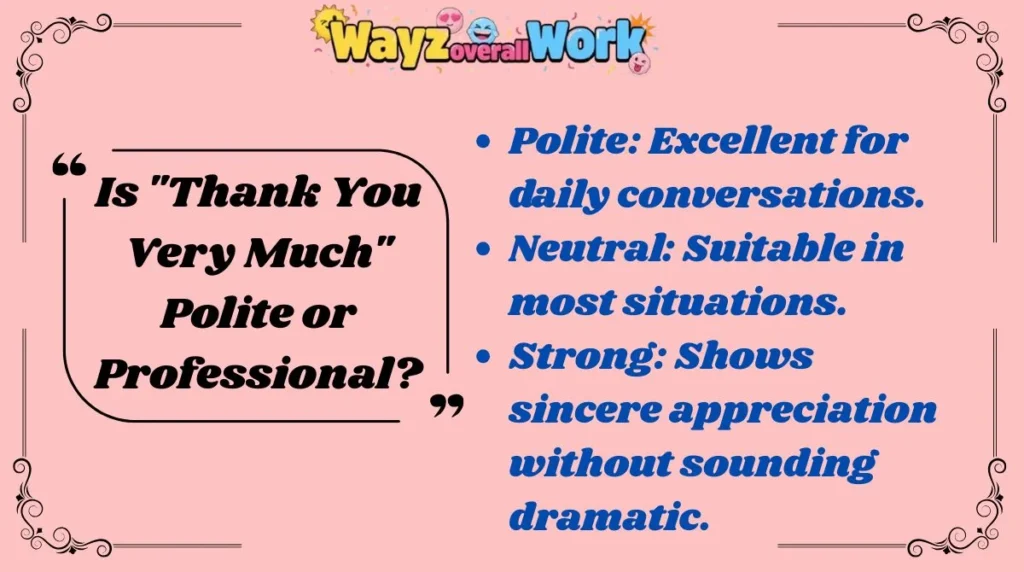
Yes. It is both polite and professional. However, the tone depends on the situation.
Polite: Excellent for daily conversations.
Neutral: Suitable in most situations.
Strong: Shows sincere appreciation without sounding dramatic.
Soft: Friendly and respectful.
Formal: Acceptable in business settings.
Informal: Also natural with family and friends.
Etiquette Tip: It is perfectly acceptable in the workplace. However, for important corporate emails, expressions like I sincerely appreciate your assistance or Many thanks for your support often sound more professional.
Pros & Cons of Using “Thank You Very Much”
✔ Pros
- Easy to understand.
- Works in almost every situation.
- Sounds polite and respectful.
- Suitable for beginners.
- Accepted in business communication.
✘ Cons
- Can become repetitive.
- May sound generic if overused.
- Sometimes lacks warmth in close relationships.
- Less memorable in professional writing.
- Stronger alternatives may fit special occasions better.
Quick Alternatives List
- Thanks a lot
- Many thanks
- Much appreciated
- I really appreciate it
- I sincerely appreciate it
- I truly appreciate your help
- I’m grateful
- I’m deeply grateful
- I can’t thank you enough
- You’re a lifesaver
- You’ve been a huge help
- Please accept my thanks
- Many thanks for your support
- My sincere thanks
- Thanks a million
- I owe you one
- I’m forever grateful
- Heartfelt thanks
Thanks a Lot
Meaning: A friendly way to say thank you.
Explanation: This phrase is common in everyday English. It sounds warm and relaxed. Native speakers often use it with friends, classmates, coworkers, and family.
Grammar Note: Informal expression.
Example Sentence: Thanks a lot for picking me up after work.
Best Use: Informal conversations, text messages, casual emails.
Worst Use: Very formal business letters.
Tone: Friendly.
Level: Beginner.
Similarity Score: 9.5/10
Replaceability Tip: Use it when you want to sound relaxed instead of formal.
Many Thanks
Meaning: A polite way to express gratitude.
Explanation: This expression is short but respectful. It is common in British English and professional emails.
Grammar Note: Formal expression.
Example Sentence: Many thanks for your quick response.
Best Use: Emails, business communication, professional messages.
Worst Use: Very casual conversations with close friends.
Tone: Professional.
Level: Beginner.
Similarity Score: 9/10
Replaceability Tip: Choose this phrase when writing polite emails.
I Really Appreciate It
Meaning: I truly value what you did.
Explanation: This expression sounds personal and sincere. It shows genuine gratitude without being too formal.
Grammar Note: Appreciation phrase.
Example Sentence: I really appreciate your advice.
Best Use: Workplace, daily conversations, emails.
Worst Use: None. It fits most situations.
Tone: Friendly and professional.
Level: Beginner.
Similarity Score: 9.5/10
Replaceability Tip: Use it when you want your thanks to feel more personal.
I Sincerely Appreciate Your Help
Meaning: A formal way to thank someone for helping you.
Explanation: This phrase sounds respectful and professional. It is common in business communication and job-related emails.
Grammar Note: Formal appreciation phrase.
Example Sentence: I sincerely appreciate your help during the project.
Best Use: Workplace, interviews, business emails.
Worst Use: Casual chats with friends.
Tone: Formal.
Level: Intermediate.
Similarity Score: 9/10
Replaceability Tip: Use this when thanking someone important in a professional setting.
Much Appreciated
Meaning: Your help is valued.
Explanation: This is a short and modern expression. It appears often in workplace chats and quick email replies.
Grammar Note: Fixed expression.
Example Sentence: Your quick reply is much appreciated.
Best Use: Emails, office messages, workplace chat.
Worst Use: Formal speeches.
Tone: Professional.
Level: Intermediate.
Similarity Score: 8.5/10
Replaceability Tip: Great when you need a short but polite response.
I’m Grateful
Meaning: I feel thankful.
Explanation: This phrase expresses genuine appreciation. It sounds warmer than a simple thank you.
Grammar Note: Adjective phrase.
Example Sentence: I’m grateful for your kindness.
Best Use: Personal conversations, speeches, thank-you messages.
Worst Use: Very quick text replies.
Tone: Warm.
Level: Beginner.
Similarity Score: 8.5/10
Replaceability Tip: Use this when you want to express heartfelt gratitude.
I Can’t Thank You Enough
Meaning: Your help means a lot to me.
Explanation: This expression emphasizes deep appreciation. It tells the listener that simple words are not enough.
Grammar Note: Idiomatic expression.
Example Sentence: I can’t thank you enough for everything you’ve done.
Best Use: Emotional situations, personal conversations, speeches.
Worst Use: Routine business emails.
Tone: Strong and heartfelt.
Level: Intermediate.
Similarity Score: 9.5/10
Replaceability Tip: Use it for special moments rather than everyday thanks.
My Sincere Thanks
Meaning: A respectful and formal expression of gratitude.
Explanation: This phrase is often used in official letters, ceremonies, and professional communication. It sounds elegant and respectful.
Grammar Note: Formal noun phrase.
Example Sentence: Please accept my sincere thanks for your continued support.
Best Use: Business letters, formal emails, acknowledgments.
Worst Use: Casual text messages.
Tone: Formal.
Level: Advanced.
Similarity Score: 9/10
Replaceability Tip: Choose this expression when writing official or ceremonial messages.
I’m Deeply Grateful
Meaning: I feel very thankful.
Explanation: This phrase expresses strong and heartfelt gratitude. It is often used when someone has made a big difference in your life or offered meaningful support. It carries more emotion than a simple “thank you very much.”
Grammar Note: Adjective phrase.
Example Sentence: I’m deeply grateful for your kindness during a difficult time.
Best Use: Personal letters, speeches, heartfelt messages, formal acknowledgments.
Worst Use: Everyday casual conversations about small favors.
Tone: Warm, formal.
Level: Intermediate.
Similarity Score: 9.5/10
Replaceability Tip: Use this when you want your appreciation to sound sincere and emotional.
Please Accept My Thanks
Meaning: A respectful way to express gratitude.
Explanation: This phrase sounds polite and professional. It is common in formal letters, official emails, and speeches.
Grammar Note: Formal expression.
Example Sentence: Please accept my thanks for your generous contribution.
Best Use: Business letters, formal emails, ceremonies.
Worst Use: Text messages to close friends.
Tone: Formal.
Level: Advanced.
Similarity Score: 9/10
Replaceability Tip: Choose this expression for respectful and professional communication.
Thanks a Million
Meaning: Thank you very much.
Explanation: This informal phrase adds enthusiasm. Native speakers often use it with friends and family. It is not meant literally.
Grammar Note: Informal idiomatic expression.
Example Sentence: Thanks a million for helping me move.
Best Use: Friends, family, casual chats.
Worst Use: Official business documents.
Tone: Friendly.
Level: Beginner.
Similarity Score: 8.5/10
Replaceability Tip: Use it when you want to sound cheerful and appreciative.
I Owe You One
Meaning: I will return the favor someday.
Explanation: This phrase thanks someone while suggesting that you would like to help them in the future. It creates a friendly connection.
Grammar Note: Idiomatic expression.
Example Sentence: I owe you one for driving me to the airport.
Best Use: Friends, coworkers you know well.
Worst Use: Formal emails or communication with clients.
Tone: Casual.
Level: Intermediate.
Similarity Score: 7.5/10
Replaceability Tip: Use this only when you have a friendly relationship with the other person.
You’ve Been a Huge Help
Meaning: You helped me a lot.
Explanation: This phrase focuses on the person’s support instead of simply saying thank you. It feels genuine and personal.
Grammar Note: Statement of appreciation.
Example Sentence: You’ve been a huge help throughout this project.
Best Use: Workplace, teamwork, friends, family.
Worst Use: Very formal letters.
Tone: Friendly, professional.
Level: Beginner.
Similarity Score: 8.5/10
Replaceability Tip: Use it when you want to recognize someone’s effort directly.
Heartfelt Thanks
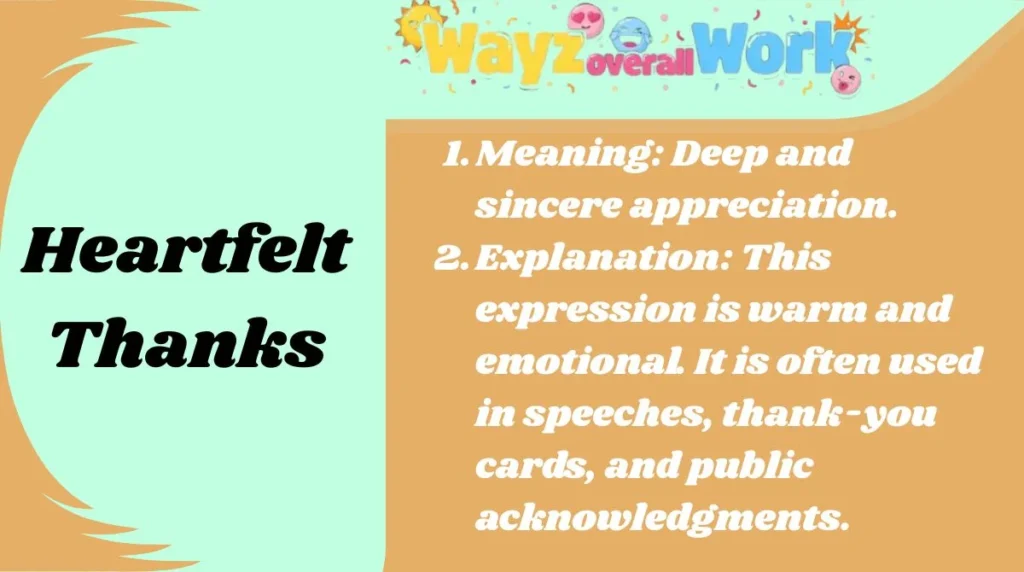
Meaning: Deep and sincere appreciation.
Explanation: This expression is warm and emotional. It is often used in speeches, thank-you cards, and public acknowledgments.
Grammar Note: Formal noun phrase.
Example Sentence: Heartfelt thanks to everyone who supported our charity event.
Best Use: Speeches, ceremonies, thank-you notes.
Worst Use: Quick office chat messages.
Tone: Warm, formal.
Level: Advanced.
Similarity Score: 9/10
Replaceability Tip: Choose this phrase for meaningful occasions.
I Truly Appreciate Your Support
Meaning: I genuinely value your help.
Explanation: This phrase sounds professional while still feeling personal. It works well in both business and personal settings.
Grammar Note: Appreciation phrase.
Example Sentence: I truly appreciate your support throughout the project.
Best Use: Workplace, business emails, academic settings.
Worst Use: None. It works almost everywhere.
Tone: Professional.
Level: Intermediate.
Similarity Score: 9.5/10
Replaceability Tip: A great replacement when you want to sound sincere and polished.
Mini Dialogue Examples
Formal Conversation
Manager: Your report was excellent. Here is the approval.
Employee: I sincerely appreciate your support. Thank you very much.
Informal Conversation
Friend: I saved you a seat at the concert.
You: Thanks a million! I really appreciate it.
Business Email Example
Subject: Thank You
Dear Ms. Wilson,
Thank you for meeting with me today. I truly appreciate your time and valuable advice. Your suggestions will help me improve my work, and I look forward to working with you again.
Kind regards,
James
Mistakes to Avoid
Many English learners make small mistakes when expressing gratitude. Here are some common ones.
- Saying thank you very much in every sentence. Use different expressions to sound natural.
- Using Thanks a million in formal business emails. It is too casual.
- Saying I owe you one to customers or senior managers. It may sound unprofessional.
- Mixing formal and informal language in the same email.
- Forgetting to mention what you are thankful for in longer messages.
- Using emotional phrases like I’m deeply grateful for very small favors.
- Choosing slang when writing academic papers or official letters.
Cultural & Tone Tips
Native English speakers appreciate sincere gratitude more than dramatic language. A simple and genuine expression usually sounds better than an exaggerated one.
UK English
British speakers often use Many thanks in professional emails. It sounds polite, friendly, and natural.
US English
American speakers frequently choose I really appreciate it, Thanks so much, or Thank you so much in both business and casual settings.
Casual Social English
Friends often use expressions like Thanks a lot, Thanks a million, or You’re a lifesaver. These sound relaxed and friendly but should usually stay out of formal business writing.
Comparison Table
| Phrase | Tone | Best Context | Professional Level | Example |
|---|---|---|---|---|
| Many thanks | Professional | Business emails | High | Many thanks for your reply. |
| I sincerely appreciate your help | Formal | Workplace | Very High | I sincerely appreciate your assistance. |
| I really appreciate it | Friendly | Daily conversation | High | I really appreciate your support. |
| Much appreciated | Professional | Office chat | High | Your help is much appreciated. |
| I’m deeply grateful | Warm | Speeches | Medium | I’m deeply grateful for your kindness. |
| Thanks a lot | Friendly | Casual conversation | Low | Thanks a lot for helping me. |
| I can’t thank you enough | Emotional | Personal situations | Medium | I can’t thank you enough for everything. |
Frequently Asked Questions
Is “thank you very much” rude?
No. It is a polite and respectful expression.
Is it okay to use it in emails?
Yes. It works in both personal and professional emails.
What is the most formal alternative?
I sincerely appreciate your assistance is one of the most formal choices.
What is the most polite alternative?
Please accept my thanks is a very polite and respectful expression.
Which expression should beginners use?
I really appreciate it and Many thanks are simple, natural, and easy to remember.
Which alternative sounds the most natural?
Native speakers often use I really appreciate it, Many thanks, and Thanks a lot, depending on the situation.
Conclusion
Learning different ways to say thank you very much helps you become a more confident English speaker and writer.
Each expression has its own tone, level of formality, and best situation. Some work better in business emails, while others are perfect for friends and family.
By choosing the right phrase, you can sound more natural, professional, and sincere. Practice these alternatives in your conversations, emails, and daily writing. The more you use them, the easier it becomes to express genuine appreciation with confidence and fluency.

Rashmeer is a passionate writer and content creator dedicated to delivering clear, engaging, and reliable information. With a focus on quality and authenticity, Rashmeer creates content that informs, inspires, and helps readers discover practical ideas and fresh perspectives.