
The phrase “join us” is one of the most common invitations in English. People use it to welcome someone to an event, meeting, activity, group, or conversation. It sounds friendly, clear, and easy to understand.
Even though it is useful, repeating the same phrase over and over can make your writing or speech sound dull. Learning different ways to say “join us” helps you sound more natural and confident. It also lets you match the right tone for different situations. A formal business email needs different wording than a casual text message or a social media post.
Using the right expression can make your invitation feel warmer, more professional, or more exciting. It also improves your communication in workplaces, schools, presentations, emails, and everyday conversations.
For example:
- Formal: We invite you to join us for the annual conference.
- Informal: Come hang out with us this weekend!
Choosing the right words helps your message leave a better impression.
What Does “Join Us” Mean?
Join us means to become part of a group, activity, event, meeting, or experience. It is a friendly invitation asking someone to take part.
It is commonly used when inviting people to attend, participate, or spend time together.
Grammar Form:
- Verb phrase
- Imperative expression (used to invite someone)
Similar expressions:
- Be part of
- Come along
- Attend
- Participate with us
- Take part
Opposite expressions:
- Stay away
- Decline the invitation
- Leave
- Opt out
- Skip the event
Examples:
- Join us for dinner tonight.
- We’d love you to join us at our team meeting.
When to Use “Join Us”
Spoken English
“Join us” works naturally in everyday conversations with friends, family, classmates, and neighbors.
Example:
“Join us for coffee after class.”
Business English
Companies often use the phrase when inviting employees, clients, or partners to meetings, webinars, workshops, and company events.
Example:
Please join us for our quarterly business presentation.
Emails and Messages
This phrase makes invitations friendly while remaining polite.
Example:
Please join us for tomorrow’s training session.
Social Media
Brands and creators often encourage followers to participate.
Example:
Join us live this Friday for exciting announcements!
Academic Writing
Schools and universities use this phrase in newsletters and event announcements.
Example:
Students are invited to join us for Career Day.
Professional Meetings
Meeting invitations often include “join us” because it sounds welcoming without being too casual.
Example:
Join us as we discuss the project’s next phase.
Is “Join Us” Polite or Professional?
The answer depends on the situation.
Polite
Yes. It sounds welcoming and respectful.
Neutral
It fits almost any everyday situation.
Strong
It encourages participation without sounding demanding.
Soft
When combined with words like please or we’d love to, it becomes even warmer.
Formal vs. Informal
Formal:
- Please join us for the ceremony.
- We invite you to join us.
Informal:
- Join us tonight!
- Come join us!
Etiquette Tip
Better for workplace: Please join us or We invite you to join us.
Avoid in formal corporate emails: Come hang out with us.
Pros & Cons of Using “Join Us”
✔ Pros
- Easy to understand
- Friendly and welcoming
- Suitable for most situations
- Professional when written politely
- Common in business communication
- Works in speech and writing
✘ Cons
- Can become repetitive
- Sometimes feels generic
- Not always formal enough for official invitations
- May sound too simple in academic or executive writing
Quick Alternatives List
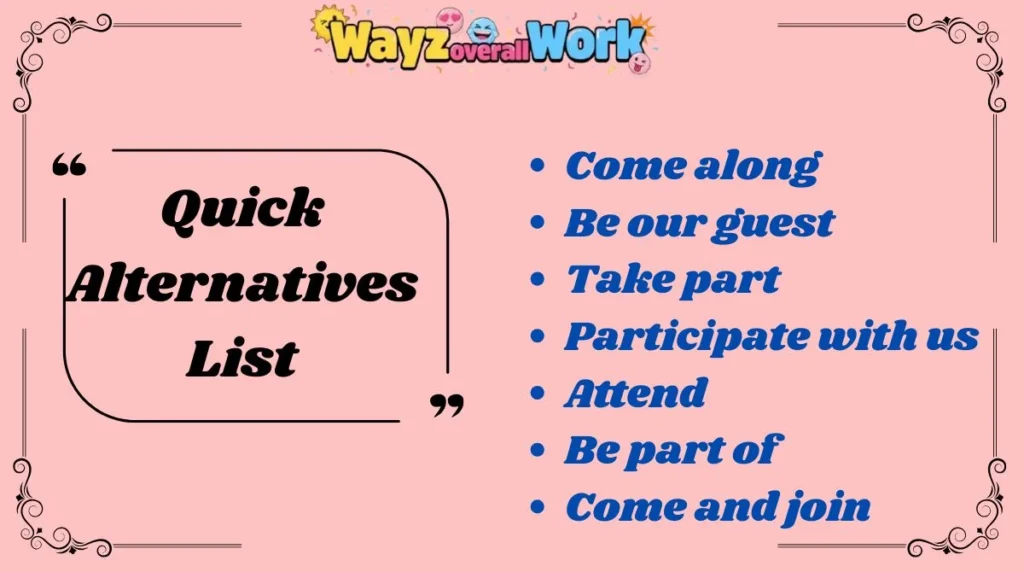
- Come along
- Be our guest
- Take part
- Participate with us
- Attend
- Be part of
- Come and join
- We invite you
- You’re welcome to attend
- Feel free to join
- Share this experience with us
- Take part in
- Celebrate with us
- Connect with us
- Join the conversation
- Accompany us
- Get involved
- Become a member
- Meet with us
- Take your place with us
Come Along
Meaning:
An informal invitation asking someone to come with a group.
Explanation:
“Come along” sounds warm, relaxed, and friendly. Native speakers often use it when inviting friends or family to social activities. It creates a casual atmosphere.
Grammar Note:
Verb phrase
Example Sentence:
Come along with us to the beach this Saturday.
Best Use:
Informal conversations, family gatherings, friendly invitations
Worst Use:
Formal business emails
Tone:
Friendly
Level:
Beginner
Similarity Score:
9/10
Replaceability Tip:
Choose this when inviting friends instead of using the more common “join us.”
Be Our Guest
Meaning:
A polite way to welcome someone.
Explanation:
This phrase feels warm, respectful, and hospitable. It is often used in formal invitations, restaurants, hotels, events, and celebrations.
Grammar Note:
Invitation phrase
Example Sentence:
Please be our guest at our annual charity dinner.
Best Use:
Formal invitations, hospitality, ceremonies
Worst Use:
Casual text messages
Tone:
Formal and polite
Level:
Intermediate
Similarity Score:
8/10
Replaceability Tip:
Use it when you want your invitation to sound elegant and welcoming.
Take Part
Meaning:
To participate in an activity.
Explanation:
Unlike “join us,” this phrase focuses more on active participation than simply attending.
Grammar Note:
Verb phrase
Example Sentence:
Students are encouraged to take part in the science competition.
Best Use:
Education, events, competitions, workplaces
Worst Use:
Dinner invitations
Tone:
Neutral
Level:
Beginner
Similarity Score:
8/10
Replaceability Tip:
Use it when participation is more important than attendance.
Participate With Us
Meaning:
To become involved in an activity together.
Explanation:
This expression sounds professional and inclusive. It is common in educational, nonprofit, and workplace settings.
Grammar Note:
Verb phrase
Example Sentence:
Participate with us in this year’s fundraising campaign.
Best Use:
Professional communication, education, community events
Worst Use:
Casual conversations with friends
Tone:
Professional
Level:
Intermediate
Similarity Score:
9/10
Replaceability Tip:
Choose this phrase when encouraging active involvement.
Attend
Meaning:
To go to an event or meeting.
Explanation:
“Attend” is more formal than “join us.” It simply means to be present.
Grammar Note:
Verb
Example Sentence:
We hope you can attend our leadership seminar.
Best Use:
Business meetings, conferences, schools
Worst Use:
Friendly weekend plans
Tone:
Formal
Level:
Beginner
Similarity Score:
8/10
Replaceability Tip:
Use it when talking about meetings, conferences, or official events.
Be Part Of
Meaning:
To belong to or participate in something.
Explanation:
This phrase creates a sense of belonging rather than simply attending.
Grammar Note:
Verb phrase
Example Sentence:
Be part of our growing community.
Best Use:
Recruitment, memberships, volunteer organizations
Worst Use:
Very formal legal documents
Tone:
Friendly and motivational
Level:
Beginner
Similarity Score:
9/10
Replaceability Tip:
Choose it when building community or teamwork.
We Invite You
Meaning:
A formal invitation.
Explanation:
This phrase is respectful and professional. It appears in business emails, official letters, ceremonies, and event announcements.
Grammar Note:
Formal invitation phrase
Example Sentence:
We invite you to attend our annual awards ceremony.
Best Use:
Corporate communication, schools, formal invitations
Worst Use:
Quick text messages to close friends
Tone:
Professional
Level:
Intermediate
Similarity Score:
10/10
Replaceability Tip:
Use this instead of “join us” when writing official invitations.
Feel Free to Join
Meaning:
An invitation without pressure.
Explanation:
This expression tells people they are welcome to participate if they wish. It sounds relaxed, friendly, and considerate.
Grammar Note:
Invitation phrase
Example Sentence:
Feel free to join our discussion whenever you’re ready.
Best Use:
Meetings, online communities, casual workplaces
Worst Use:
Formal legal notices
Tone:
Soft and friendly
Level:
Intermediate
Similarity Score:
9/10
Replaceability Tip:
Choose this phrase when you want people to feel comfortable instead of obligated.
You’re Welcome to Attend
Meaning:
A polite way to tell someone they are invited to an event.
Explanation:
This phrase is common in professional settings. It sounds respectful and gives the listener the freedom to decide. It is often used in emails, event invitations, and workplace announcements.
Grammar Note:
Formal invitation phrase
Example Sentence:
You’re welcome to attend our monthly networking event.
Best Use:
Business emails, seminars, conferences, workshops
Worst Use:
Very casual conversations with close friends
Tone:
Formal and polite
Level:
Intermediate
Similarity Score:
9/10
Replaceability Tip:
Use this phrase when you want your invitation to sound courteous without being too formal.
Come and Join
Meaning:
An enthusiastic invitation to be part of something.
Explanation:
This phrase is energetic and welcoming. It is often used for community events, school activities, and promotional messages.
Grammar Note:
Verb phrase
Example Sentence:
Come and join us for a fun family picnic this Sunday.
Best Use:
Community events, family activities, advertisements
Worst Use:
Formal corporate documents
Tone:
Friendly
Level:
Beginner
Similarity Score:
10/10
Replaceability Tip:
Use this when you want your invitation to sound cheerful and exciting.
Celebrate With Us
Meaning:
An invitation to share a happy occasion.
Explanation:
This phrase focuses on enjoying a special event together. It works well for birthdays, weddings, anniversaries, grand openings, and holiday celebrations.
Grammar Note:
Verb phrase
Example Sentence:
Celebrate with us as we mark our company’s tenth anniversary.
Best Use:
Special events, parties, ceremonies, festivals
Worst Use:
Business meetings or training sessions
Tone:
Warm and joyful
Level:
Beginner
Similarity Score:
8/10
Replaceability Tip:
Choose this phrase when the purpose is celebration rather than discussion.
Get Involved
Meaning:
To actively participate in an activity or project.
Explanation:
Unlike “join us,” this phrase encourages people to contribute their time, skills, or ideas. It motivates action instead of simple attendance.
Grammar Note:
Phrasal verb
Example Sentence:
Get involved in our community volunteer program.
Best Use:
Volunteer work, charities, school clubs, organizations
Worst Use:
Formal dinner invitations
Tone:
Encouraging
Level:
Intermediate
Similarity Score:
8/10
Replaceability Tip:
Use this when you want people to become active participants.
Connect With Us
Meaning:
An invitation to communicate or build a relationship.
Explanation:
This expression is common in business, marketing, and social media. It encourages interaction instead of physical attendance.
Grammar Note:
Verb phrase
Example Sentence:
Connect with us on LinkedIn to receive industry updates.
Best Use:
Social media, websites, networking
Worst Use:
Invitations to weddings or family dinners
Tone:
Professional
Level:
Beginner
Similarity Score:
7/10
Replaceability Tip:
Choose this phrase when the goal is communication rather than attending an event.
Become a Member
Meaning:
To officially join a group or organization.
Explanation:
This phrase is commonly used by clubs, associations, gyms, online communities, and subscription services. It highlights long-term participation.
Grammar Note:
Verb phrase
Example Sentence:
Become a member today and enjoy exclusive benefits.
Best Use:
Membership programs, organizations, clubs
Worst Use:
One-time events
Tone:
Professional
Level:
Intermediate
Similarity Score:
7/10
Replaceability Tip:
Use this when inviting someone to join permanently instead of attending once.
Accompany Us
Meaning:
To go somewhere together with someone.
Explanation:
“Accompany us” is more formal than “join us.” It often appears in travel invitations, official events, and ceremonial language.
Grammar Note:
Verb
Example Sentence:
We would be honored if you could accompany us to the awards ceremony.
Best Use:
Formal invitations, ceremonies, official events
Worst Use:
Casual text messages
Tone:
Formal
Level:
Advanced
Similarity Score:
8/10
Replaceability Tip:
Choose this phrase when writing elegant or highly professional invitations.
Mini Dialogue Examples
Formal Conversation
Manager: We are hosting our annual leadership conference next Friday.
Employee: That sounds interesting.
Manager: We invite you to join us for the opening session.
Employee: Thank you. I would be pleased to attend.
Informal Conversation
Emma: We’re going to the park after school.
Jake: Really?
Emma: Come along with us!
Jake: Sure! I’d love to.
Business Email Example
Subject: Webinar Invitation
Dear Ms. Carter,
We invite you to attend our online webinar on customer experience. You’re welcome to join us as we discuss practical strategies that businesses can use to improve client satisfaction.
We look forward to seeing you.
Kind regards,
The Marketing Team
Mistakes to Avoid
- Using “join us” in every sentence instead of varying your vocabulary.
- Saying “attend us,” which is incorrect. Use “attend the meeting” or “join us.”
- Using very casual phrases like “come hang out” in professional emails.
- Using “become a member” for one-day events when “attend” is more suitable.
- Mixing formal and informal language in the same invitation.
- Forgetting to include “please” in formal invitations when appropriate.
- Choosing expressions that do not match the purpose of the event.
Cultural & Tone Tips
Native English speakers generally see “join us” as friendly, welcoming, and polite. It works in many situations without sounding too formal or too casual.
UK English
British English often prefers polite wording such as “Please join us,” “We invite you,” or “You’re welcome to attend.” These expressions sound respectful and professional.
US English
American English commonly uses “Join us,” “Come and join us,” and “Come along.” These expressions feel warm and approachable.
Casual Social English
Among friends, people often choose relaxed phrases such as “Come along,” “Come join us,” or “Hang out with us.” These expressions create a friendly and informal feeling.
Comparison Table
| Phrase | Tone | Best Context | Professional Level | Example |
|---|---|---|---|---|
| We Invite You | Formal | Business invitations | High | We invite you to our conference. |
| Attend | Formal | Meetings and seminars | High | Please attend tomorrow’s meeting. |
| You’re Welcome to Attend | Polite | Professional emails | High | You’re welcome to attend the webinar. |
| Come Along | Friendly | Friends and family | Low | Come along with us this evening. |
| Take Part | Neutral | Activities and competitions | Medium | Take part in our workshop. |
| Be Part Of | Motivational | Communities and teams | Medium | Be part of our growing network. |
| Celebrate With Us | Warm | Parties and special events | Medium | Celebrate with us this weekend. |
Frequently Asked Questions
Is “join us” rude?
No. It is polite, friendly, and suitable for most situations.
Is “join us” okay in emails?
Yes. It works well in professional emails, especially when combined with please or we invite you.
What is the most formal alternative?
We invite you is one of the most formal and professional alternatives.
What is the most polite alternative?
You’re welcome to attend and Be our guest are both very polite.
Which alternative is easiest for beginners?
Come along and Take part are simple and easy to remember.
Which alternative is best for the workplace?
We invite you, Attend, and Participate with us are excellent choices for professional communication.
Conclusion
Learning different ways to say “join us” makes your English stronger and more natural.
Each alternative has its own tone and purpose. Some expressions are perfect for business emails, while others fit friendly conversations, social media posts, or formal invitations.
By choosing the right phrase, you can communicate more clearly and leave a better impression on your audience. Practice these alternatives in real conversations, emails, and presentations.
The more you use them, the more confident and fluent your English will become.

Rashmeer is a passionate writer and content creator dedicated to delivering clear, engaging, and reliable information. With a focus on quality and authenticity, Rashmeer creates content that informs, inspires, and helps readers discover practical ideas and fresh perspectives.