

Wishing someone “sweet dreams” is a kind way to end a conversation before bedtime. It shows care, warmth, and the hope that the other person has a peaceful and restful sleep. People use this phrase with family members, friends, partners, children, and sometimes even coworkers in casual conversations.
Learning other ways to say “sweet dreams” helps you sound more natural and confident in English. Different situations call for different expressions. A friendly text message, a professional email, or a heartfelt message may all require a different tone.
Choosing the right words can make your communication feel warmer, more respectful, or more professional.
Using varied vocabulary also improves your English writing and speaking. It helps you avoid repeating the same phrase and makes your conversations, messages, essays, and workplace communication more engaging.
Example:
- Formal: Have a restful evening.
- Informal: Sleep tight!
Even though both express good wishes before bedtime, they create very different impressions.
What Does “Sweet Dreams” Mean?
Sweet dreams is a common English expression used to wish someone a pleasant night’s sleep and enjoyable dreams. It is usually said just before someone goes to bed.
It expresses kindness, affection, and good wishes rather than giving a literal instruction.
Grammar Form
Sweet dreams is an expression (fixed phrase/interjection). It is commonly used on its own as a complete farewell before bedtime.
Similar Expressions
- Sleep well
- Rest well
- Have a good night’s sleep
- Sleep peacefully
- Rest easy
Opposite Tone
While there is no direct opposite, phrases with an opposite meaning or mood include:
- Stay awake.
- Pull an all-nighter.
- Don’t sleep yet.
Example Sentences
- Sweet dreams! I’ll see you tomorrow morning.
- Good night, sweet dreams, and take care of yourself.
When to Use “Sweet Dreams”
Spoken English
“Sweet dreams” is very common in everyday conversations with family, friends, children, and loved ones. It creates a warm and caring ending before bedtime.
Example:
“Good night, sweet dreams!”
Business English
This phrase is usually not appropriate in business settings because it sounds too personal.
Instead, choose:
- Have a restful evening.
- Have a good evening.
- Rest well.
Emails and Messages
Use “sweet dreams” only when writing to someone you know well.
Suitable for:
- Family
- Close friends
- Romantic partners
Avoid it in professional emails.
Social Media
It works naturally in captions and comments.
Examples:
- Sweet dreams, everyone!
- Hope you all sleep well tonight.
Academic Writing
Do not use “sweet dreams” in academic essays or formal reports because it is conversational rather than academic.
Professional Meetings
Avoid ending meetings with “sweet dreams,” even if the meeting is late at night.
Better choices include:
- Have a good evening.
- Get some rest.
- See you tomorrow.
Is “Sweet Dreams” Polite or Professional?
The phrase is polite and friendly, but it is generally not professional.
Polite
Yes. It shows kindness and care.
Neutral
Not exactly. It carries warmth and emotion.
Soft
Very soft and gentle.
Strong
No. It is a mild and comforting expression.
Formal vs. Informal
| Style | Suitable? |
|---|---|
| Formal | Rarely |
| Informal | Excellent |
| Professional | Usually avoid |
| Friendly | Excellent |
| Romantic | Excellent |
Etiquette Tip
✅ Best for: Family, friends, romantic partners, and children.
❌ Avoid in: Corporate emails, formal business communication, and professional meetings.
Pros & Cons of Using “Sweet Dreams”
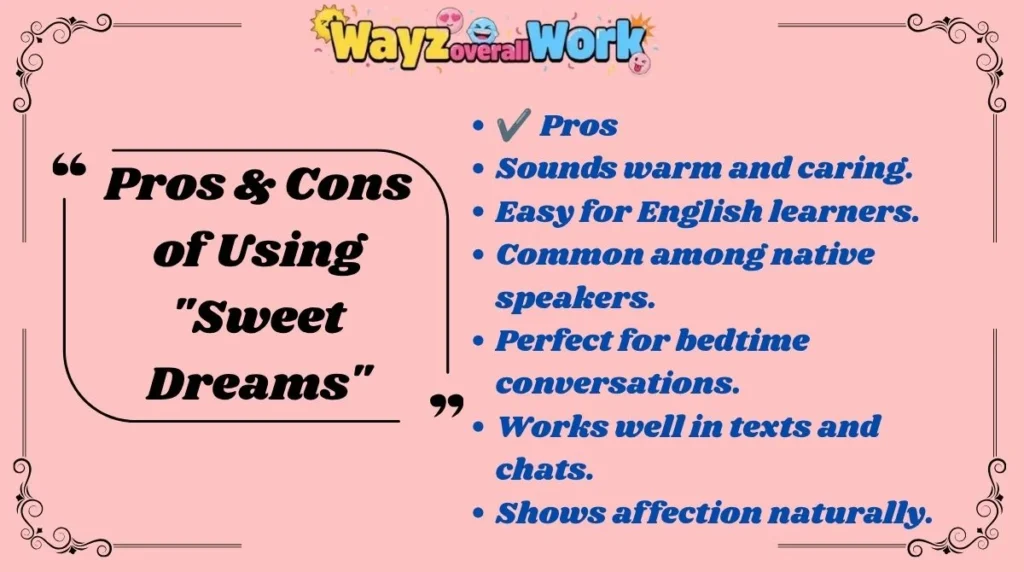
✔ Pros
- Sounds warm and caring.
- Easy for English learners.
- Common among native speakers.
- Perfect for bedtime conversations.
- Works well in texts and chats.
- Shows affection naturally.
✘ Cons
- Too personal for business settings.
- Can sound childish in some situations.
- Not suitable for academic writing.
- Repeating it often may sound repetitive.
- Doesn’t fit every professional relationship.
Quick Alternatives List
If you need a fast replacement, try one of these expressions:
- Sleep well
- Sleep tight
- Rest well
- Rest easy
- Have a good night’s sleep
- Have a restful night
- Dream peacefully
- Pleasant dreams
- Good night and rest well
- Take care and sleep well
- Hope you sleep well
- Enjoy a peaceful night
- Wishing you restful sleep
- Have a relaxing evening
- May you sleep peacefully
- See you tomorrow—sleep well
- Take it easy tonight
- Recharge well
Sleep Well
Meaning
A simple way to wish someone a good night’s sleep.
Explanation
Sleep well is one of the closest alternatives to sweet dreams. It focuses on getting quality sleep rather than having pleasant dreams. It sounds natural in almost every casual situation and is accepted in many semi-professional conversations.
Grammar Note
Fixed expression.
Example Sentence
Sleep well, and I’ll call you in the morning.
Best Use
- Informal
- Friendly conversations
- Family
- Text messages
Worst Use
Highly formal business emails.
Tone
Friendly • Neutral • Soft
Level
Beginner
Similarity Score
10/10
Replaceability Tip
Use sleep well when you want a simple, natural expression that works with almost everyone.
Rest Well
Meaning
A polite wish for someone to relax and recover during sleep.
Explanation
This phrase emphasizes physical rest instead of dreams. It is warmer than “good night” but more professional than “sweet dreams.” It works well after someone has had a busy day or is feeling tired.
Grammar Note
Verb phrase.
Example Sentence
You’ve had a long day. Rest well tonight.
Best Use
- Workplace
- Friends
- Emails
- Family
Worst Use
Playful conversations with children.
Tone
Professional • Soft
Level
Beginner
Similarity Score
9/10
Replaceability Tip
Choose this phrase when you want to sound caring without sounding overly personal.
Sleep Tight
Meaning
A traditional bedtime wish.
Explanation
Sleep tight is a very common expression in English-speaking countries. It does not literally mean sleeping tightly. Instead, it simply wishes someone a comfortable night’s sleep. It is especially popular with children and family members.
Grammar Note
Idiom-like expression.
Example Sentence
Good night, sleep tight!
Best Use
- Family
- Children
- Casual conversations
Worst Use
Formal workplace communication.
Tone
Friendly • Warm
Level
Beginner
Similarity Score
9/10
Replaceability Tip
Use it with close friends or family when you want a cheerful bedtime farewell.
Have a Good Night’s Sleep
Meaning
A complete and polite wish for quality sleep.
Explanation
This expression sounds a little longer and more thoughtful than sleep well. It feels sincere and works in both personal and semi-professional conversations.
Grammar Note
Verb phrase.
Example Sentence
I hope you have a good night’s sleep before your interview.
Best Use
- Emails
- Friends
- Family
- Workplace
Worst Use
Very short text messages.
Tone
Neutral • Polite
Level
Beginner
Similarity Score
9/10
Replaceability Tip
Use it when you want your message to sound caring and complete.
Rest Easy
Meaning
Sleep peacefully without worry.
Explanation
This phrase encourages someone to relax and let go of stress. Native speakers often use it when someone has experienced a difficult or stressful day. It has a comforting and reassuring tone.
Grammar Note
Verb phrase.
Example Sentence
Everything is taken care of now. Rest easy tonight.
Best Use
- Emotional support
- Friends
- Family
- Caring messages
Worst Use
Formal reports or presentations.
Tone
Comforting • Soft
Level
Intermediate
Similarity Score
8/10
Replaceability Tip
Choose this expression when someone needs reassurance before bedtime.
Pleasant Dreams
Meaning
A polite wish for enjoyable dreams.
Explanation
Pleasant dreams is slightly more formal and literary than sweet dreams. Although it is less common in everyday speech, native speakers still understand it easily. It adds elegance to bedtime messages.
Grammar Note
Fixed expression.
Example Sentence
Pleasant dreams, and enjoy your vacation tomorrow.
Best Use
- Greeting cards
- Personal letters
- Romantic notes
Worst Use
Business meetings.
Tone
Formal • Gentle
Level
Intermediate
Similarity Score
10/10
Replaceability Tip
Use this phrase when you want a graceful and polished alternative.
Have a Restful Night
Meaning
A wish for peaceful and refreshing sleep.
Explanation
This expression highlights relaxation rather than dreams. It is common in supportive conversations and can even sound appropriate in professional settings when someone has been working hard.
Grammar Note
Verb phrase.
Example Sentence
Have a restful night. Tomorrow will be a busy day.
Best Use
- Workplace
- Emails
- Friends
- Healthcare settings
Worst Use
Very playful conversations.
Tone
Professional • Polite
Level
Intermediate
Similarity Score
8/10
Replaceability Tip
Use this phrase when you want to sound respectful and considerate.
Hope You Sleep Well
Meaning
A caring way to express your wish for someone’s good sleep.
Explanation
Unlike commands such as sleep well, this phrase sounds more personal because it expresses your hope rather than giving a direct wish. It is common in text messages and conversations between close friends and family members.
Grammar Note
Sentence expression.
Example Sentence
I know you’ve been stressed lately. Hope you sleep well tonight.
Best Use
- Text messages
- Family
- Friends
- Romantic conversations
Worst Use
Formal business correspondence.
Tone
Friendly • Caring • Soft
Level
Beginner
Similarity Score
9/10
Replaceability Tip
Choose this expression when you want your bedtime message to sound thoughtful and personal.
Dream Peacefully
Meaning
A gentle wish for someone to have calm and pleasant dreams.
Explanation
Dream peacefully focuses on both restful sleep and peaceful dreams. It sounds warm, caring, and slightly poetic. Native speakers do not use it as often as sleep well, but it is easy to understand and works well in personal messages.
Grammar Note
Verb phrase.
Example Sentence
Dream peacefully, and I’ll see you tomorrow morning.
Best Use
- Romantic messages
- Family
- Greeting cards
- Personal texts
Worst Use
Business emails and formal workplace communication.
Tone
Soft • Warm • Caring
Level
Intermediate
Similarity Score
9/10
Replaceability Tip
Use this phrase when you want your bedtime wish to sound more heartfelt than sweet dreams.
Take Care and Sleep Well
Meaning
A bedtime wish that combines care and good wishes.
Explanation
This phrase expresses concern for someone’s well-being before they go to sleep. It sounds thoughtful and works well for friends, relatives, and colleagues you know well.
Grammar Note
Sentence expression.
Example Sentence
Take care and sleep well after your long journey.
Best Use
- Friendly emails
- Family
- Friends
- Text messages
Worst Use
Formal corporate emails.
Tone
Friendly • Polite
Level
Beginner
Similarity Score
8/10
Replaceability Tip
Choose this phrase when you want to show kindness in addition to wishing someone a good night’s sleep.
Enjoy a Peaceful Night
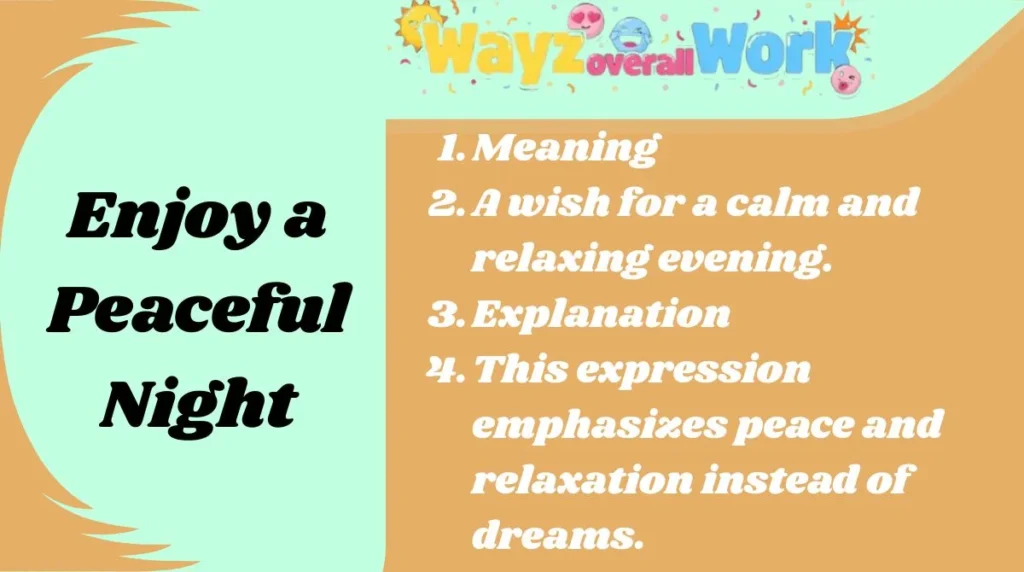
Meaning
A wish for a calm and relaxing evening.
Explanation
This expression emphasizes peace and relaxation instead of dreams. It is more formal than sweet dreams and can work in customer service, hospitality, and polite conversations.
Grammar Note
Verb phrase.
Example Sentence
Enjoy a peaceful night, and we’ll continue tomorrow.
Best Use
- Professional conversations
- Hospitality
- Friendly emails
Worst Use
Playful chats with children.
Tone
Professional • Polite • Soft
Level
Intermediate
Similarity Score
7/10
Replaceability Tip
Use it when you want a respectful alternative that still sounds warm.
May You Sleep Peacefully
Meaning
A sincere wish for peaceful sleep.
Explanation
This expression has a gentle and almost literary style. It sounds thoughtful and is common in heartfelt messages, greeting cards, and supportive conversations.
Grammar Note
Wish expression.
Example Sentence
May you sleep peacefully and wake up refreshed.
Best Use
- Personal letters
- Greeting cards
- Encouraging messages
Worst Use
Casual office chats.
Tone
Formal • Gentle
Level
Advanced
Similarity Score
8/10
Replaceability Tip
Use this phrase when writing a meaningful or emotional bedtime message.
Recharge Well
Meaning
A modern way to wish someone good rest.
Explanation
This phrase compares sleep to recharging a battery. It is common in modern English, especially among coworkers and younger speakers. It suggests that rest will prepare someone for the next day.
Grammar Note
Verb phrase.
Example Sentence
You’ve earned a break. Recharge well tonight.
Best Use
- Workplace
- Friends
- Team chats
Worst Use
Romantic bedtime messages.
Tone
Modern • Friendly • Professional
Level
Intermediate
Similarity Score
6/10
Replaceability Tip
Use this expression when talking about energy, productivity, or recovery.
Have a Relaxing Evening
Meaning
A wish for a calm and enjoyable evening.
Explanation
Unlike sweet dreams, this phrase focuses on the time before sleep. It works well when saying goodbye earlier in the evening rather than right before bedtime.
Grammar Note
Verb phrase.
Example Sentence
Have a relaxing evening, and see you tomorrow.
Best Use
- Business emails
- Professional conversations
- Friends
Worst Use
Messages sent after someone has already gone to bed.
Tone
Professional • Neutral
Level
Beginner
Similarity Score
6/10
Replaceability Tip
Choose this phrase if the person is ending work but not necessarily going straight to bed.
See You Tomorrow—Sleep Well
Meaning
A friendly goodbye combined with a bedtime wish.
Explanation
This expression naturally ends a conversation while also wishing someone a good night’s sleep. It is common between classmates, coworkers, and friends.
Grammar Note
Sentence expression.
Example Sentence
See you tomorrow—sleep well!
Best Use
- School
- Workplace
- Friends
- Family
Worst Use
Formal business correspondence.
Tone
Friendly • Natural
Level
Beginner
Similarity Score
8/10
Replaceability Tip
Use it when you already know you’ll meet the person the next day.
Mini Dialogue Examples
Formal Conversation
Manager: Thank you for staying late to finish the project.
Employee: You’re welcome. Have a good evening.
Manager: Have a restful night. We’ll continue tomorrow.
Informal Conversation
Emma: I’m finally going to bed.
Lily: Okay! Sleep tight!
Emma: Thanks! Sweet dreams!
Lily: You too!
Business Email Example
Subject: Thank You for Today’s Meeting
Hello David,
Thank you for your time today. I appreciate your valuable insights. Have a restful evening, and I look forward to speaking with you tomorrow.
Best regards,
Sarah
Mistakes to Avoid
Many English learners make small mistakes when using sweet dreams and similar expressions. Avoid these common errors:
- Using sweet dreams in formal business emails where have a good evening is more appropriate.
- Saying sleep tightly instead of sleep tight.
- Using bedtime expressions during the daytime.
- Mixing formal and informal language in the same message.
- Overusing sweet dreams in every conversation instead of varying your vocabulary.
- Assuming every alternative has the same level of warmth or professionalism.
- Using romantic expressions with coworkers or clients.
Cultural & Tone Tips
Native English speakers usually see sweet dreams as a warm, friendly, and caring expression. It is especially common among family members, close friends, couples, and parents speaking to children.
UK English
British speakers commonly use:
- Sleep well
- Sleep tight
- Night, night (especially with children)
These expressions sound natural and friendly.
US English
American English frequently uses:
- Sweet dreams
- Sleep tight
- Rest well
- Sleep well
These phrases are widely understood and commonly heard.
Casual Social English
In text messages and social media, shorter versions are common:
- Sleep well!
- Rest up!
- Night!
- Sweet dreams!
- See you tomorrow!
These sound relaxed and natural.
Comparison Table
| Phrase | Tone | Best Context | Professional Level | Example |
|---|---|---|---|---|
| Sleep well | Friendly | Daily conversation | Medium | Sleep well tonight. |
| Rest well | Professional | Workplace, emails | High | Rest well after today’s meeting. |
| Sleep tight | Warm | Family, children | Low | Sleep tight! |
| Have a restful night | Polite | Business, healthcare | High | Have a restful night. |
| Pleasant dreams | Gentle | Greeting cards | Medium | Pleasant dreams! |
| Hope you sleep well | Caring | Friends, family | Medium | Hope you sleep well tonight. |
| Enjoy a peaceful night | Professional | Customer service | High | Enjoy a peaceful night. |
FAQs
Is sweet dreams rude?
No. It is a kind and caring expression used before bedtime.
Is it okay to use sweet dreams in emails?
Yes, but only in personal emails. Avoid it in formal business emails.
What is the most formal alternative?
Have a restful evening or Have a restful night.
What is the most polite alternative?
Rest well is one of the most polite and versatile choices.
What should beginners use?
Sleep well is simple, natural, and easy to remember.
Which alternative is closest to sweet dreams?
Pleasant dreams and sleep well are among the closest alternatives.
Conclusion
Learning different ways to say sweet dreams helps you communicate more naturally and confidently in English. While sweet dreams is warm and friendly, it is not always the best choice for every situation.
Expressions like sleep well, rest well, have a restful night, and enjoy a peaceful evening allow you to match your words to the setting and the relationship.
Expanding your vocabulary improves your fluency, strengthens your writing, and helps you sound more like a native speaker. Practice these alternatives in real conversations, text messages, emails, and everyday interactions.
The more you use them, the more natural they will become, making your English clearer, richer, and more expressive.

Rashmeer is a passionate writer and content creator dedicated to delivering clear, engaging, and reliable information. With a focus on quality and authenticity, Rashmeer creates content that informs, inspires, and helps readers discover practical ideas and fresh perspectives.